Buying a new motorcycle or scooter is an exciting milestone, but navigating the paperwork that comes with it can be confusing. When it is time to secure your vehicle, you are immediately faced with a critical choice: should you buy basic third-party coverage or invest in a comprehensive policy?
Understanding the difference is vital. Making the wrong choice when purchasing bike insurance can leave you completely exposed to massive financial losses if your vehicle is stolen or severely damaged in an accident.
What is the Difference Between the Two Policies?
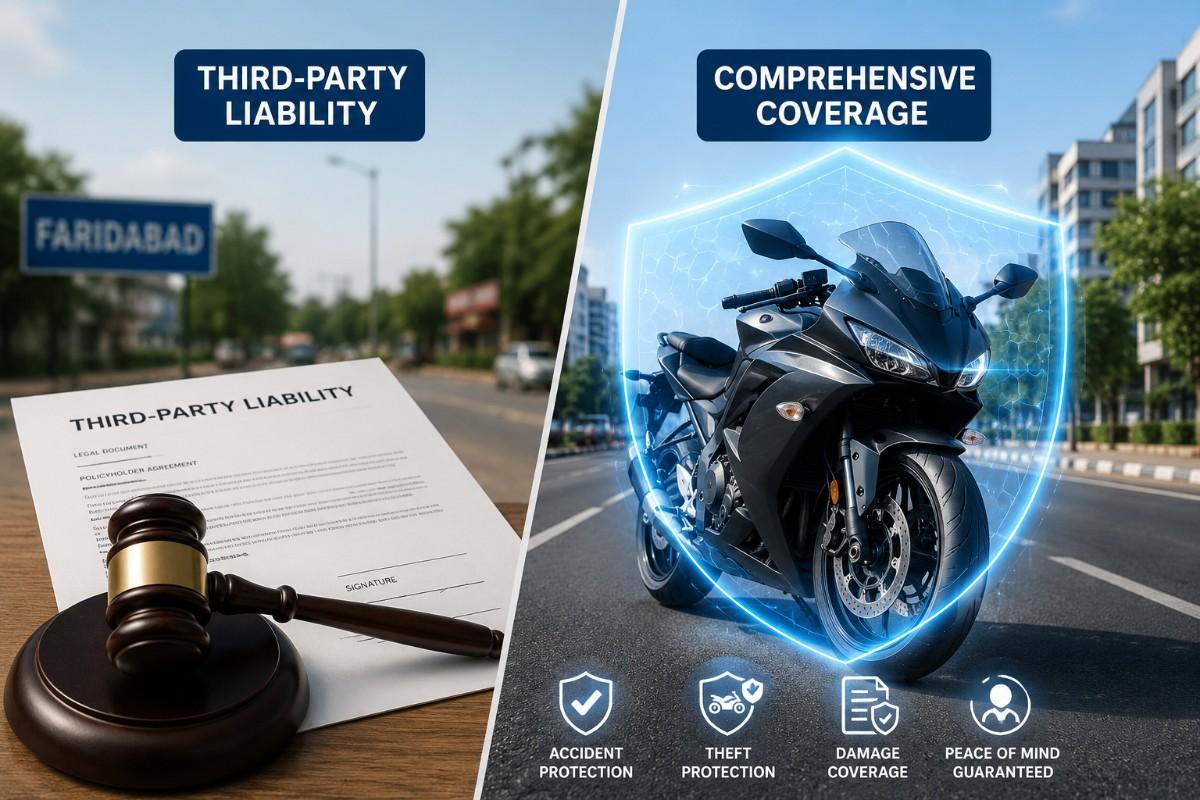
The primary difference is the scope of coverage. A Third-Party Policy only covers financial liabilities for injuries, death, or property damage caused to another person by your vehicle. It does not cover damages to your own bike. A Comprehensive Policy includes mandatory third-party liability but also provides “Own Damage” protection, covering your vehicle against accidents, theft, fire, and natural disasters.
Understanding Third-Party Liability Coverage
Under the Motor Vehicles Act of 1988, having third-party insurance is legally mandatory for every single vehicle operating on Indian roads. If you are caught riding without it, you face severe traffic penalties and e-challans.
What it covers:
- Injuries or death caused to a third person by your two-wheeler.
- Damages caused to third-party property (like another vehicle or a boundary wall).
What it does NOT cover:
If you crash your bike into a tree, or if it gets stolen from your parking lot, a third-party policy pays you absolutely nothing. You will have to bear the entire cost of replacing or repairing your own vehicle.
Understanding Comprehensive Coverage
A comprehensive two-wheeler policy is a bundle. It automatically includes the legally required third-party liability, but adds a crucial layer of protection known as “Own Damage” (OD) cover.
What it covers:
- Everything included in a third-party policy.
- Accidental Damages: Repair costs if your bike is damaged in a road accident.
- Theft: Full payout (up to the Insured Declared Value) if your bike is stolen.
- Natural & Man-made Disasters: Protection against floods, earthquakes, fires, and vandalism.
Quick Comparison: Third-Party vs. Comprehensive
| Feature | Third-Party Insurance | Comprehensive Insurance |
|---|---|---|
| Legal Compliance | Meets mandatory legal requirements. | Meets mandatory legal requirements. |
| Own Vehicle Damage | Not Covered. | Fully Covered (Accidents, Fire, Weather). |
| Theft Protection | Not Covered. | Covered (Payout up to IDV). |
| Add-on Availability | Cannot purchase add-ons. | Eligible for Zero Dep, Engine Protect, etc. |
| Premium Cost | Lower (Fixed annually by IRDAI). | Higher (Based on vehicle age and IDV). |
Which Policy Should You Choose?
If you are riding a brand-new motorcycle, a high-end sports bike, or rely on your scooter for daily commuting, a comprehensive scooter insurance cover is non-negotiable. The cost of replacing plastic fairings, digital consoles, or the entire vehicle in case of theft far outweighs the slight increase in premium.
Third-party insurance should only be considered if your two-wheeler is exceptionally old (over 10-15 years), its current market value is negligible, and you rarely take it out on the road.
Ride with Absolute Peace of Mind
Don’t risk your savings on a basic legal-only policy. Contact our Faridabad experts today to compare comprehensive plans and get the maximum protection for your two-wheeler.
Get a Free Bike Policy Quote