
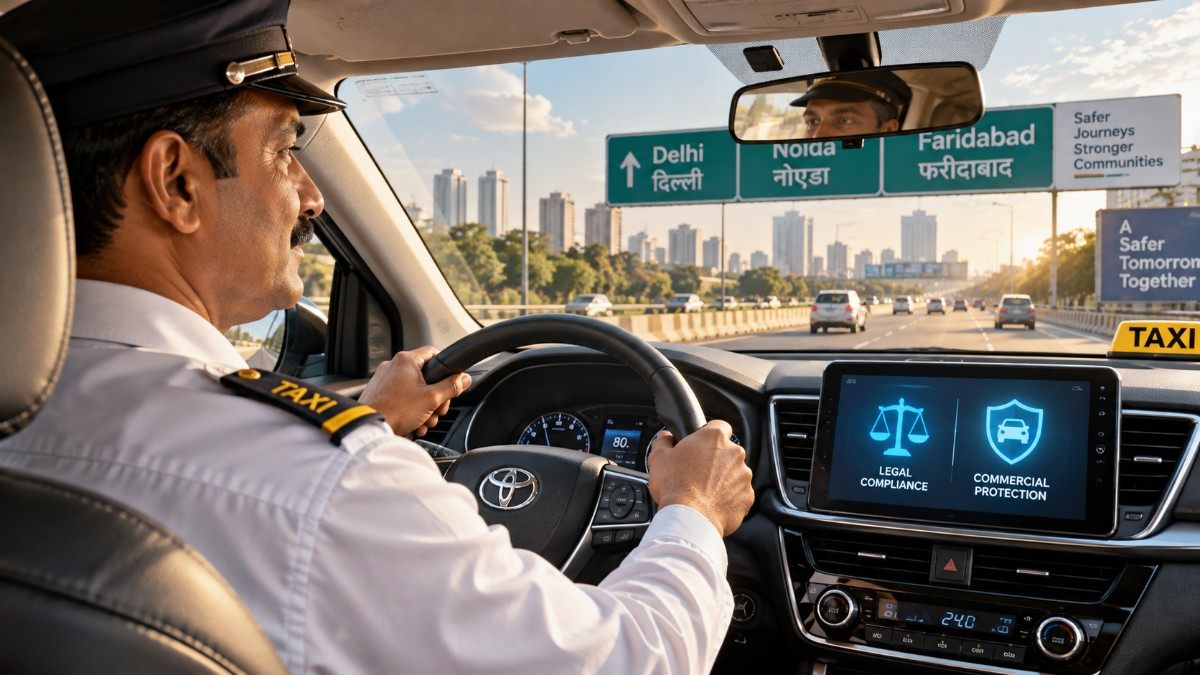
Operating a vehicle professionally across Indian roadways comes with substantial daily exposure to commercial risks, stringent traffic regulations, and heavy civil liabilities. Many drivers and small fleet owners often ask whether they must transition to a dedicated commercial policy or if a standard private car insurance plan is sufficient for their routine travel needs.
The answer depends entirely on how the vehicle is registered and whether compensation or hire charges are involved. Operating commercially without the right classification creates devastating financial risks. When building your vehicle safeguards, let Faridabad Insurance Wala help you find the right commercial car insurance quote.
The Definitive Answer for Professional Drivers in India
Statutory Mandate & Liability Protection
- The Legal Verdict: Yes. If a professional driver operates a vehicle for hire, reward, taxi aggregators (like Ola/Uber), passenger shuttle duties, or goods delivery, opting for a commercial car insurance policy is a non-negotiable statutory requirement under the Motor Vehicles Act, 1988.
- Immediate Claim Rejection Risk: Using a private registration (white-plate) car with a private policy for commercial passenger transport is treated as material misrepresentation. In an accident, insurers will immediately reject 100% of Own Damage and third-party liabilities.
- Unlimited MACT Liability Protection: Commercial vehicle policies safeguard drivers and owners against massive financial compensation awards decreed by the Motor Accident Claims Tribunal (MACT) for passenger or third-party injury and fatality.
- Employee & Driver Coverage (IMT 28): Commercial policies allow specific legal liability endorsements for paid drivers, ensuring medical expenses and disability compensation under the Employee’s Compensation Act are fully covered.
Private vs. Commercial Insurance: Critical Differences for Drivers
Under Indian insurance law, policies are strictly categorized by vehicle registration and usage intent. Understanding these fundamental differences highlights why commercial policies are indispensable for professional operators:
| Factor | Private Car Insurance (White Plate) | Commercial Car Insurance (Yellow Plate) |
|---|---|---|
| Permitted Usage | Personal, domestic, and social purposes only. | Commercial hire, passenger transport, taxi services, and logistics. |
| Third-Party Liability | Covers general pedestrians and third-party property. | Mandatory legal liability for third parties plus fare-paying passengers. |
| Driver Liability Cover | Optional personal accident cover for owner-driver. | Statutory Paid Driver Liability cover under IMT 28 / IMT 29. |
| Commercial Activity Claim | Completely repudiated (null and void) if fare is collected. | Fully payable subject to active commercial permit and fitness certificate. |
| Statutory Penalty | Fines up to ₹4,000 and vehicle impoundment for commercial misuse. | 100% legally compliant under RTO and VAHAN transport frameworks. |
3 Legal and Financial Dangers of Driving Without Commercial Insurance
1. Severe MACT Financial Exposure
In India, when an accident involves bodily injury or death to a passenger or third party, compensation claims are decided by the Motor Accident Claims Tribunal (MACT). These awards routinely range from ₹15 Lakhs to several Crores based on the victim’s age and income potential. If a professional driver operates under an invalid or private policy, the insurer repudiates the claim, making the driver and vehicle owner personally liable to pay every single rupee awarded by the court.
2. Complete Forfeiture of Own Damage Claims
If your vehicle gets damaged in an accident while transporting paying passengers under a private policy, insurance surveyors verify the trip details and passenger statements. Once commercial use is confirmed, your claim will be rejected immediately on grounds of “limitation as to use,” leaving you to bear all structural and engine repair bills out-of-pocket.
3. Legal Prosecution Under the Motor Vehicles Act
Operating a private vehicle as an unlicensed commercial transport violates Section 66 and Section 192A of the Motor Vehicles Act. Violations carry immediate spot fines of up to ₹10,000, vehicle impoundment by traffic authorities, and potential suspension of your driving license.
Essential Endorsements Professional Drivers Must Have
When purchasing commercial vehicle insurance in India, professional drivers should verify that these specific clauses are actively endorsed on their policy schedule:
- IMT 28 (Legal Liability to Paid Driver / Cleaner): Protects employers and drivers under the Workmen’s Compensation Act in the event of accidental death or permanent disablement during employment.
- Legal Liability to Passengers (LLP): Mandated per-seat passenger liability cover protecting fare-paying passengers against unforeseen road mishaps.
- Bi-Fuel CNG Kit Endorsement: For commercial fleets operating on CNG, the retrofitted gas kit must be declared to preserve own damage and fire protection coverage.
Ensure 100% Commercial Road Compliance
Don’t gamble your career or financial freedom on an improper vehicle policy. Let our experts structure the right coverage with full passenger and paid driver endorsements.
Consult With Our Commercial Team